Climatic Role of Water apor and Clouds
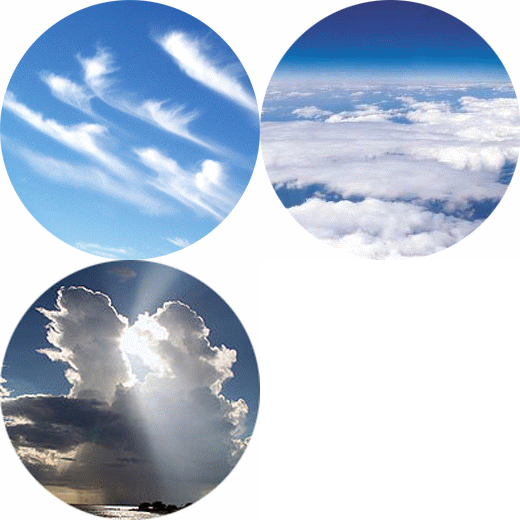
Clouds and water vapor
are defining elements of the Earth's atmosphere. Water vapor provides
most of the greenhouse effect of the earth's atmosphere. Clouds are a
major reflector of incoming solar radiation. Clouds and water vapor are
both the product and driver of the motions in the atmosphere. There are
also key ingradients in the interaction between the atmosphere and
other components of the climate system. What determines the amount of
clouds and water vapor in the atmosphere? What's their role in the
climate variability? How will they respond to global warming? These are
some sample questions concerning the climatic role of water vapor and
clouds that we are trying to address through analyzing observational data
and modeling.
Because the close association with small-scale motions in the
atmopshere--bounday layer turbulence and moist convection, clouds and
water vapor are difficult to simulate by climate models. Cloud
feedbacks are considered as a major uncertainty in climate models by
IPCC. The realism of water vapor feedback in climate models is also
subject to debate.
How to better represent the effects of water vapor and clouds in
climate models is also an issue that I am concerned with.
Water vapor and clouds are components of a larger picture--the earth's hydrological cycle. Addressing how the atmospheric hydrological cycle responds to global warming is a long-term goal of our research.
Publications:
© 2008-2010 Harmony Institute for Earth Care. All rights reserved
|

